
How Much Google Ads Really Cost a Small Business in 2026
2026-09-24 · by Lin Zeri
"How much does Google Ads cost?" has no single answer, and anyone who gives you one number before asking about your business is guessing. The honest answer is that you are really asking about three different costs: what you pay Google for clicks, what you pay someone to run the account, and what each customer inquiry costs you at the end. Mix them up and a perfectly healthy campaign can look like a money pit.
This guide pulls the three apart. You will see how Google decides what a click costs, why industry averages are a poor guide for your own budget, how to estimate your numbers before you spend a dollar, and what to ask an agency so the fee does not surprise you.
TL;DR
- There is no fixed price. Google Ads runs on an auction, so the cost of a click depends on your market, your keywords, and how relevant your ad and page are.
- You pay three things: the clicks (to Google), the management (to you or an agency), and the lead (what each call or form actually costs you).
- Your bid is a ceiling. Google says what you actually pay "is often less" than the maximum you set (Google, "About Ad Rank", Google Ads Help, accessed Oct. 2026).
- Do not budget from industry averages. Use Google's own Keyword Planner estimates for your trade and city, then do the math backwards from the jobs you need.
- Ads amplify a business that already converts. If calls go unanswered, more clicks only mean more waste.
What You Pay Google: The Click
Google Ads charges per click on Search campaigns. Each time someone searches, Google runs an auction among advertisers who want to show up for that search. You tell Google the most you are willing to pay for a click, and Google's own help page puts it plainly: "When you set your bid, you're telling Google Ads the maximum amount you're willing to pay for a click on your ad. How much you actually end up paying is often less." (Google, "About Ad Rank", Google Ads Help, accessed Oct. 2026).
So your maximum bid is a ceiling, not a price tag. The click can cost you less, never more. Google documents this directly: a click "won't cost you more than the maximum cost-per-click bid (or "max. CPC") that you set" (Google, "About maximum CPC bidding", Google Ads Help, accessed Oct. 2026).
What decides the actual price? The same page lists what feeds the auction: your bid, the quality of your ads and landing page, the competitiveness of the auction, the context of the person's search, and the expected impact of your ad assets and other formats. Three of those matter most to a small business owner:
- Competition. If many advertisers want the same search, the price rises for everyone. A plumber in a large metro competes with more bidders than a dog groomer in a small town.
- Intent. "Emergency plumber near me" is a different animal from "how to fix a leaky faucet." The first is ready to hire. Advertisers know it and bid accordingly.
- Quality. Better ads and a landing page that matches the search help you win placements without simply outbidding everyone.
A note on Quality Score, because it gets misunderstood. Google describes it as a score from 1 to 10 built from expected click-through rate, ad relevance and landing page experience, and says plainly that "Quality Score is not an input in the ad auction. It's a diagnostic tool" (Google, "About Quality Score for Search campaigns", Google Ads Help, accessed Oct. 2026). Treat it as a check-up for your keywords, not as a dial that lowers your price on its own. The pieces behind it (relevant ads, a page that delivers what the ad promised) are what actually help.
The number you will see in your account is average CPC. Google defines it simply: "Average cost-per-click (avg. CPC) is calculated by dividing the total cost of your clicks by the total number of clicks." (Google, "Average cost-per-click (Avg. CPC): Definition", Google Ads Help, accessed Oct. 2026). It is an outcome of your campaign, not a rate card you can look up in advance.
What You Pay for Management: Your Time or an Agency

The click money goes to Google. Running the account is a separate cost, and it is the one most owners forget to count.
If you run it yourself, the cost is your time. Setting up conversion tracking, choosing keywords, writing ads, adding negative keywords, reading reports and adjusting bids is real weekly work. Price your own hours honestly. An hour you spend in a keyword report is an hour you are not quoting a job.
If you hire an agency or freelancer, the cost is a management fee on top of the ad spend. Agencies structure that fee in different ways, and this is where owners get surprised. Instead of asking "what does it cost?", ask these questions before you sign anything:
- How is the fee calculated? A flat monthly amount, a percentage of ad spend, or a hybrid. Each has trade-offs. A percentage fee grows when your budget grows, whether or not results do.
- Is there a setup fee? And what exactly does setup include: tracking, landing page, account structure?
- Who owns the ad account? It should be yours. If the agency owns the account, your data and history leave when they do.
- What does reporting show? You want calls and leads by campaign, not just clicks and impressions.
- Is there a contract minimum? And what happens if you stop?
- Is the landing page included? The page is usually what decides whether clicks become calls, so a campaign without one is half a job.
A good agency can earn its fee by making the click money work harder: tighter keywords, fewer wasted searches, a page that converts. A bad one just spends your budget faithfully. The difference shows up in the third cost.
What You Really Pay: The Lead
The third number is the one that matters for your business: what it costs to get one real inquiry, a phone call or a form that comes from someone who might hire you. That is your cost per lead, and it depends on two things: how much each click costs and how many clicks turn into contacts.
Here is the arithmetic with made-up numbers, for illustration only and not a market benchmark. If a click costs you $6 and one in ten clicks becomes a call, each call costs $60. If your page converts one in twenty instead, the same click now produces a $120 call. Nothing changed in the auction. The landing page did that.
And a lead is not a customer. If you close one in four of your calls, that $60 call becomes a $240 customer. Then the real question is whether $240 makes sense against what a customer is worth to you. A large remodeling job can carry a very different acquisition cost than a single cleaning visit, unless that cleaning client books every other week for years. Keep the lifetime value of a customer in mind, not just the first invoice.
This is also where Local Services Ads change the math. With them, Google says "You still only pay for valid leads (such as phone calls and messages) rather than ad clicks" (Google, "Local Services Ads transition to Performance Max campaigns with pay-per-lead goals", Google Ads Help, accessed Oct. 2026). Google also notes that lead prices "may vary depending on your location, the job type, the type of lead, or your bidding mode," and that message leads are typically priced lower than phone leads, "although that's not always the case" (Google, "How leads work", Local Services Help, accessed Oct. 2026). If your trade qualifies, our full comparison of Local Services Ads versus Google Ads shows which fits which situation.
Why Industry Averages Mislead You

Search "average CPC by industry" and you will find tidy tables with a neat dollar figure next to every trade. Be careful with them. Many come from agencies or software vendors, and the sample is often unclear: which country, which time period, how many campaigns, which kinds of accounts. A figure with no published method is just a number on a page.
Even a solid average hides the thing you care about. It blends big-budget national chains with a one-truck local shop, emergency searches with research searches, and a major metro with a small town. Your cost can sit far from the middle of that blend.
What you can say with confidence is directional, and it follows from how the auction works:
- High-value, urgent services (emergency plumbing, HVAC replacement, roofing after a storm, legal help) tend to draw more bidders, because one customer is worth a lot. That pushes clicks up.
- Lower-ticket or less urgent services tend to be cheaper per click, but each customer is worth less, so the math is not automatically easier.
- Aesthetic and medical-adjacent services such as med spas can be expensive too, when the value per client is high and many advertisers compete for the same searches.
- Location matters as much as trade. Competition differs from city to city, so the same keyword can cost different amounts in each.
- Seasons can move prices. Demand spikes (a heat wave, a storm, tax season) can bring more advertisers into the same auction.
Instead of trusting a table, use the tool Google gives you. Keyword Planner lets you "view the average cost for your ad to show on searches for a keyword," and its plan forecast "shows you how many conversions, clicks, or impressions you're likely to get for your keywords based on your spend" (Google, "Use Keyword Planner", Google Ads Help, accessed Oct. 2026). Google notes that you must finish account setup, including billing information, to reach the basic features. Treat the output as an estimate for your keywords and city, which is exactly the scope you need.
Another useful number is the top-of-page bid estimate, which Google defines as "the bid you likely need to set for your ad to be shown among the ads at the top of the first page of search results" (Google, "Top of page bid estimate: Definition", Google Ads Help, accessed Oct. 2026). It is an estimate, not a guarantee, but it tells you how expensive clicks are in your market before you commit.
If you want to see how an actual trade plays out, the marketing for cleaning companies guide walks through the economics of a recurring-revenue service.
How Much Should You Budget?
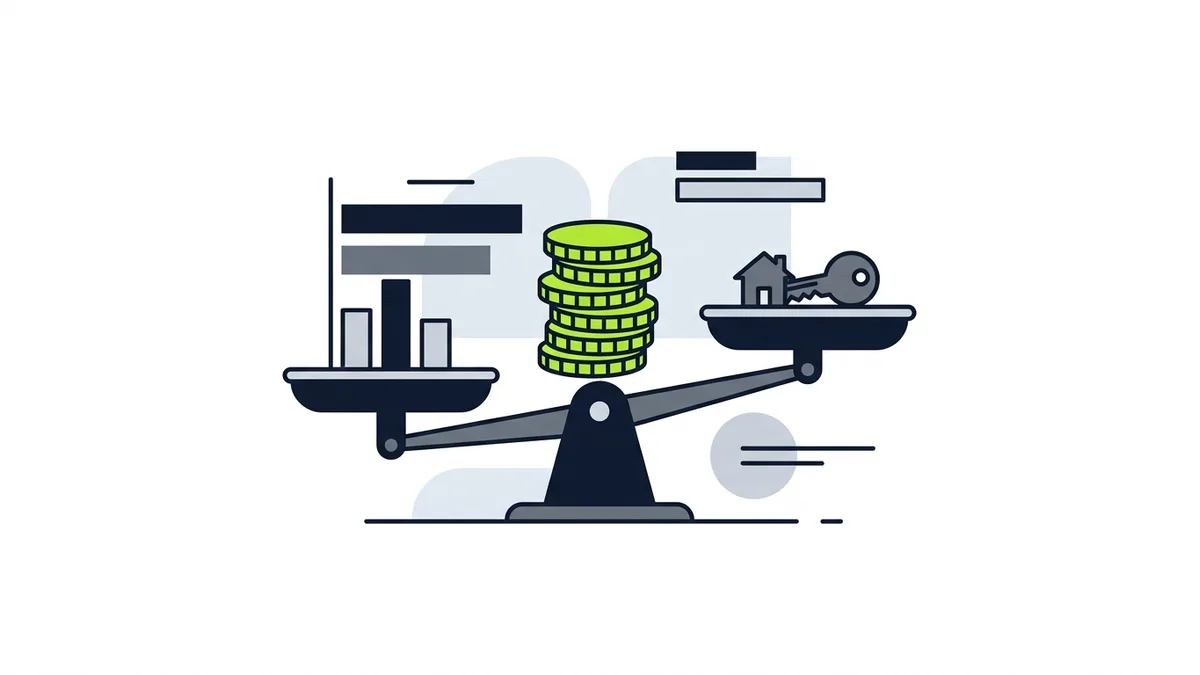
You will hear rules of thumb about spending a share of revenue on marketing. They can be a starting point for a conversation, but they are not a rule, and your business is not an average. A new business with no reviews and a mature business with a full calendar need very different things from ads.
A better method works backwards from the jobs you want:
- Decide how many new customers you want a month. Be realistic about what your crew or calendar can handle.
- Estimate your close rate. Of the people who call, how many book? If you do not know, track it for a while before you scale spend.
- Work out the leads you need. New customers divided by close rate.
- Estimate cost per lead. Use Keyword Planner for the click price and be conservative about your conversion rate.
- Multiply. Leads needed times cost per lead is your working budget.
- Check it against customer value. If acquiring a customer costs more than the first job earns and there is no repeat business, the model does not close.
An illustrative run, again with invented numbers: you want 8 new customers a month and close one in four calls, so you need 32 calls. If a call costs about $70, the click budget is around $2,240 a month, before any management fee. If that is more than you can carry, the move is not to shrink the budget until nothing works. Narrow the target: fewer services, a tighter service area, only your highest-margin job. Or pick a different channel first.
For context on what other small businesses spend, one US survey commissioned by Intuit's SMB MediaLabs estimated the average small business advertising budget at roughly $78,000 for the year (Intuit QuickBooks, 2025, accessed Oct. 2026). Do not read that as a target. It is an average across businesses with anywhere from zero to more than 100 employees, so larger operations likely pull it upward. Plenty of local businesses learn what works with a much smaller test.
Budget also depends on how much the platform can use. Google's own help page for Local Services Ads notes that "The higher your weekly budget, the more leads you could get" (Google, "How bidding works for Local Services Ads", Local Services Help, accessed Oct. 2026), and that similar local businesses bidding on the same lead determine how much it is worth. A budget that is too low for your market can leave you invisible for most of the month. A budget that is too high for your conversion setup just burns money faster.
If you want a longer walk-through of the math, our guide to what paid ads cost a local business works through the auction and budget in more depth.
The Costs That Do Not Show Up on the Google Invoice
Some real costs never appear in your Google Ads account:
- The landing page. Sending paid traffic to a homepage that buries the phone number is the quiet budget killer. A page built for the search, with a visible way to call, is part of the cost of doing this properly.
- Call tracking and conversion tracking. Without them you cannot tell which keywords bring customers and which bring wrong numbers. Some tools carry a monthly fee.
- Answering the phone. An ad that gets a call nobody picks up is the most expensive kind of click. If you cannot answer in the moment, you need a callback habit or a service that does.
- Your Google Business Profile. People who click your ad often look you up on Maps next. An incomplete profile with few reviews can undo the work your ad did. The Google Business Profile optimization checklist covers what to fix first.
- Time to learn. A new campaign needs data before you can judge it. Budget for a learning period, and do not conclude after a handful of clicks that "ads do not work."
When Google Ads Is Not the Right First Move
Ads amplify what already works. If your service area is tiny, your margins are thin, and every lead needs a long sales conversation, paid search may cost more than it returns. If you are brand new with no reviews and no profile, organic local visibility can be a cheaper place to start, and ads can come in once the foundation holds. Ads and local search are not competitors: they capture different moments of the same customer's decision.
It is also fair to ask whether you have the capacity to take the work. A campaign that succeeds in filling your calendar for a quarter you cannot staff will damage your reviews. Growth you cannot serve is not growth.
Frequently Asked Questions
How much does Google Ads cost per month for a small business?
There is no fixed price, because Google Ads is an auction and your costs depend on your trade, your city and how well your ads and landing page match what people search. Set the maximum you are willing to spend, then work backwards from the customers you want, your close rate and an estimated cost per lead. Use Google's Keyword Planner to estimate click costs for your own keywords instead of trusting a generic average.
Do I pay Google if nobody clicks my ad?
On standard Search campaigns, you pay when someone clicks, not when your ad is shown. Local Services Ads work differently: you pay for valid leads, such as phone calls and messages, rather than clicks.
Is the cost per click the same as the cost per customer?
No. A click costs what the auction says. A customer costs all the clicks it took to get a call, divided by how many of those calls you close. A page that converts better or a team that answers faster lowers your cost per customer without changing a single bid.
What does an agency charge to manage Google Ads?
It varies by agency. Fees can be a flat monthly amount, a percentage of ad spend or a mix, and some charge a setup fee. Ask how the fee is calculated, who owns the ad account, what the reports show and whether there is a contract minimum. The ad spend itself always goes to Google, separate from the management fee.
Can I just set a low budget and see what happens?
You can, and many people should start smaller than they think. But a budget too low for your market may not collect enough data to tell you anything. Start from the math of what one customer is worth, so a small test still has a chance of giving you a real answer.
Should I do Google Ads or local SEO first?
It depends on your starting point. If you have no profile, no reviews and no site that converts, fix that foundation first. If the basics are solid and you need calls soon, ads can fill the gap while organic visibility builds. Many businesses end up using both.
What to Take Away
- Google Ads has three costs: the click, the management and the lead. Judge your campaign by the lead and the customer, not the click.
- Your bid is a ceiling. The auction usually charges less, and relevance helps more than raw budget.
- Skip generic CPC tables. Use Keyword Planner and the top-of-page bid estimate for your trade and city.
- Build your budget backwards from the customers you want, your close rate and what a customer is worth.
- Count the hidden costs: landing page, tracking, answering the phone and your Google Business Profile.
Want help working out your own numbers? You can read how we approach paid advertising for local businesses, or see how to get in touch. Or tell me how your business is doing today and I will tell you where ads or local search pay off first: send a message on WhatsApp and we will go through it together. The diagnosis is free, with no deadline.
Sources
- Google, "About Ad Rank", Google Ads Help, accessed Oct. 2026, https://support.google.com/google-ads/answer/1722122
- Google, "About maximum CPC bidding", Google Ads Help, accessed Oct. 2026, https://support.google.com/google-ads/answer/6326
- Google, "About Quality Score for Search campaigns", Google Ads Help, accessed Oct. 2026, https://support.google.com/google-ads/answer/6167118
- Google, "Average cost-per-click (Avg. CPC): Definition", Google Ads Help, accessed Oct. 2026, https://support.google.com/google-ads/answer/14074
- Google, "Top of page bid estimate: Definition", Google Ads Help, accessed Oct. 2026, https://support.google.com/google-ads/answer/6292661
- Google, "Use Keyword Planner", Google Ads Help, accessed Oct. 2026, https://support.google.com/google-ads/answer/7337243
- Google, "Local Services Ads transition to Performance Max campaigns with pay-per-lead goals", Google Ads Help, accessed Oct. 2026, https://support.google.com/google-ads/answer/17213585
- Google, "How leads work", Local Services Help, accessed Oct. 2026, https://support.google.com/localservices/answer/7195435
- Google, "How bidding works for Local Services Ads", Local Services Help, accessed Oct. 2026, https://support.google.com/localservices/answer/10125017
- Intuit QuickBooks / Intuit SMB MediaLabs, "Small Business Advertising Trends Report", 2025, accessed Oct. 2026, https://quickbooks.intuit.com/r/small-business-data/advertising-trends-2025/