
HVAC Marketing: How to Win Calls Before the Season Starts
2026-10-02 · by Lin Zeri
An HVAC company does not have one kind of customer. It has at least two, and they search, decide and buy in completely different ways. One homeowner is standing in a hot house with a dead system and wants a phone to ring. Another is planning to replace an aging unit and is comparing three companies on a laptop.
Most HVAC marketing fails because it treats both the same. It also fails on timing: the busiest weeks of the year are the worst time to start building visibility. This guide covers how to win calls before the season starts, which channels fit which buyer, and how maintenance plans turn a seasonal business into a steadier one.
Key Takeaways
- Emergency repair and planned replacement are two different searches. Build separate ads, pages and follow-up for each.
- Google says local rankings rest mainly on relevance, distance and popularity, and that you cannot pay for a better local ranking. A complete profile and a steady flow of reviews have to be in place before the rush.
- Local Services Ads charge for valid leads, not clicks, but eligibility and screening vary by category and region. Confirm yours before you plan around them.
- Maintenance plans are the best answer to seasonality: they put recurring work on the calendar in the slow months.
- Answering the phone is part of your marketing. Google says Local Services Ads ranking may be affected if you regularly fail to answer calls or respond to messages.
Why Is HVAC Marketing Different From Other Local Services?
HVAC combines three things that rarely sit together: urgent demand, very large tickets, and sharp seasonality. A plumber gets steady calls year-round. A house cleaner books recurring visits. An HVAC company can go from quiet to overwhelmed within a few hot or cold days, then back again.
That has a direct marketing consequence. Demand is not something you create. It arrives with the weather, and your job is to be the company that is already visible, already trusted and already easy to call when it does. Companies that wait for the first heat wave to think about ads are competing for attention with everyone else who waited, at the moment auctions are most crowded and customers are least patient.
It also changes how you measure success. A quiet month with no calls does not mean marketing is broken. A busy month does not mean it is working. What matters is how much of the busy period you captured and how much of the slow period you filled with planned work.
Emergency Calls vs. Planned Replacements: Who Are You Talking To?
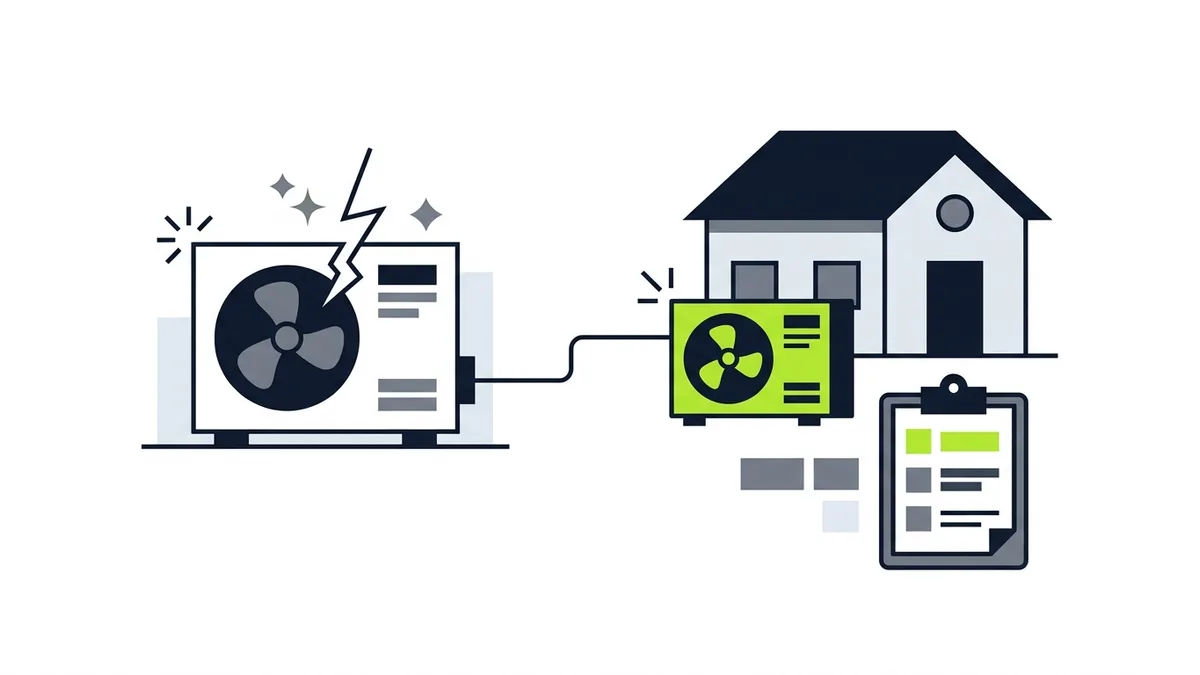
The emergency buyer searches things like "ac not working near me" or "furnace repair." They want speed, a real person on the phone and a believable promise that someone can come out. They rarely read much. They call the first credible option, or the second if the first does not pick up.
The replacement buyer searches differently: "how much does a new air conditioner cost," "heat pump vs furnace," "best HVAC company in [city]." They read reviews, compare quotes and take their time. Trust, financing options and clear explanations win this buyer, not urgency.
A common mistake is sending both buyers to the same page. The emergency visitor needs a big phone button and a line about how you handle urgent calls. The replacement visitor needs information: what the process looks like, what affects the price, what a good quote includes. Putting everything on one page serves neither well.
Here is how the two compare in practice:
| Emergency repair | Planned replacement | |
|---|---|---|
| Typical search | "ac repair near me" | "new furnace installation" |
| What they want | Fast answer, call now | Trust, options, a clear quote |
| Best channels | Local Services Ads, Search Ads, map listing | Reviews, website content, Search Ads, follow-up |
| Page needs | Phone button, service area, urgent-call message | Process, financing information, proof, quote request |
| Biggest risk | Missed call | Slow or unclear follow-up |
Neither is better. Emergency calls fill the schedule quickly. Replacements are where the largest jobs and the better margins usually sit. A healthy HVAC marketing plan feeds both.
Why Should You Prepare Before the Season, Not During It?
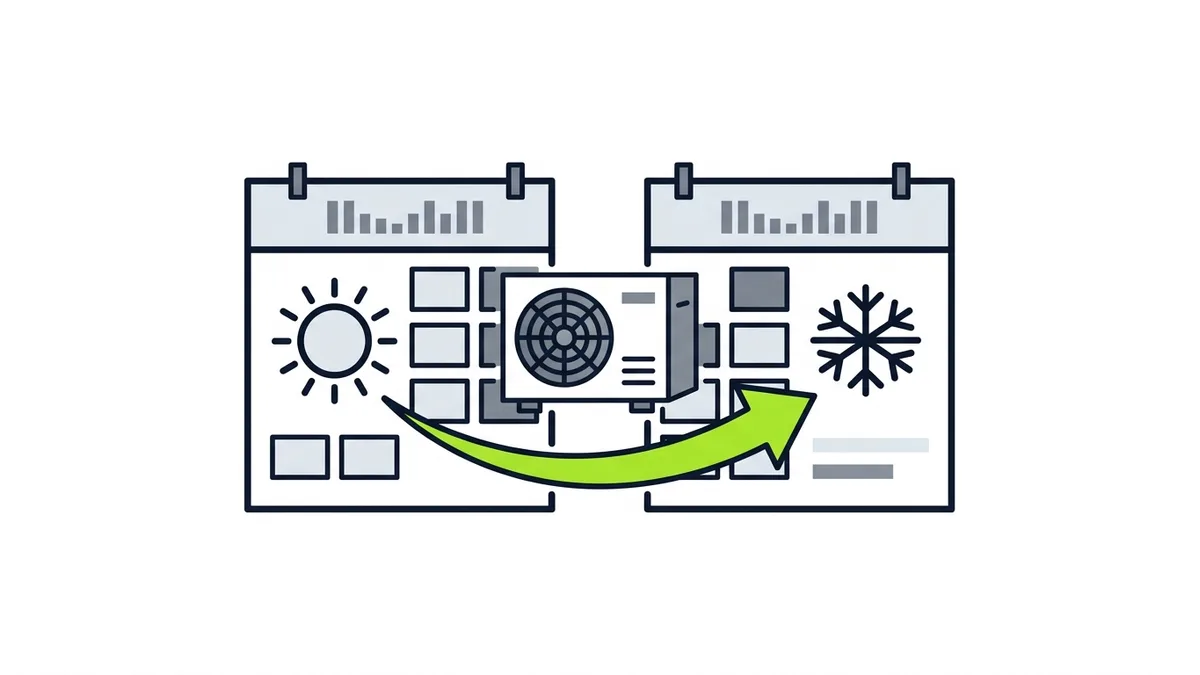
There is no fixed number of weeks that a profile, a review base or a Google Ads account needs to start performing, and anyone who promises one is guessing. What is certain is that these assets build gradually, and that the weeks when customers need you most are not the weeks to start.
Think in two seasons, cooling and heating, and treat the stretch before each one as setup time. A simple pre-season checklist:
- Update the Google Business Profile. Confirm hours, phone number, services and service area. Add recent photos of real jobs.
- Ask for reviews from recent customers. Do this steadily, not in a panic. See the guide to getting Google reviews for scripts and what Google does not allow.
- Check your website. Does the phone number sit at the top of every page? Does each service have its own page? Is there a clear way to request a quote?
- Build the ad account early. Set up campaigns, conversion tracking and call tracking while there is time to test and fix. Let the account gather data before the rush, not during it.
- Prepare the phones. Decide who answers, what happens after hours and how missed calls get returned. A strong campaign sending calls to voicemail is money spent on a competitor.
- Line up a follow-up routine for estimates that did not close. Replacement buyers often decide later.
A useful rule: any task that depends on Google learning about you, trusting you or collecting data should start before the season. Any task that depends on current weather, such as a promotion or a message about a heat wave, can wait until it arrives.
How Do You Show Up in the Map Results?
For both buyer types, the map results at the top of the page are often where the first contact happens. Google says local results are mainly based on relevance, distance and popularity, that popularity depends partly on how many websites link to your business and how many reviews you have, and that there is no way to request or pay for a better local ranking (Google, "Improve your local ranking on Google", Google Business Profile Help, accessed Oct. 2026).
Distance is the factor you cannot change, so work on the other two:
- Relevance: pick the category that matches your main work (HVAC contractor, for example) and list each service you actually perform: repair, installation, maintenance, duct work and so on. Describe them in plain language.
- Popularity: earn reviews steadily and reply to them. In 2026, 80% of consumers said they are more likely to use a business that replies to all of its reviews (BrightLocal, 2026, via PinMeTo, accessed Oct. 2026). Reviews that mention the specific service, such as a quick repair or a replacement, help the next buyer see themselves in your customers.
Mind the profile rules too. Google tells service-area businesses to hide their business address from customers (Google, "Guidelines for representing your business on Google", Business Profile Help, accessed Oct. 2026). If your crews work out of a shop and visit customers at their homes, check how your profile should be set up. For the complete walkthrough, see the Google Business Profile optimization checklist.
Should You Use Local Services Ads or Google Search Ads?
Probably both, in the right order and with realistic expectations.
Local Services Ads (LSA) appear in Google Search and Maps. With LSA you pay for valid leads, such as phone calls and messages, rather than clicks (Google, "Local Services Ads transition to Performance Max campaigns with pay-per-lead goals", Google Ads Help, accessed Sep. 2026). The badge is now called Google Verified (you may still hear the old name, Google Guaranteed), and it signals that the business passed Google's screening. That screening may include license, insurance and background checks, and it varies by category and region (Google, "How providers qualify for Local Services Ads", Local Services Help, accessed Oct. 2026). Check whether your trade qualifies in your area before you build a plan around LSA.
One more detail matters for HVAC. Google says that if you regularly fail to answer calls or respond to messages, your ad ranking may be affected (Google, "Getting started with Local Services Ads", Local Services Help, accessed Oct. 2026). For a business where the emergency caller moves on after one unanswered ring, that is a reason to fix the phones first.
Google also describes lead pricing as variable: it may vary by location, job type, type of lead or bidding mode, and message leads are typically priced lower than phone leads, although that is not always the case (Google, "How leads work", Local Services Help, accessed Oct. 2026). So no honest article can give you a standard price per HVAC lead. Your own market decides it. For a deeper side-by-side, read Local Services Ads vs. Google Ads.
Google Search Ads give you more control. You choose the keywords, write the message and send each buyer to the right page. That is how you separate the emergency campaign from the replacement campaign. Emergency campaigns need ad copy about fast response and a call button. Replacement campaigns can point to a detailed page and a quote form.
Some practical settings to review:
- Keep emergency and replacement keywords in separate campaigns so budgets do not compete and messages stay clear.
- Use negative keywords to filter out job seekers, DIY searches and parts shoppers, for example "hvac jobs" or "how to fix."
- Target the areas you actually serve, not the whole metro, so your crews are not driving across town for one job.
- Use call tracking and conversion tracking so you know which campaign produces calls that become jobs, not just clicks.
- Plan the budget from your own arithmetic. Google's Keyword Planner can estimate costs for your keywords and area, once the account setup and billing information are complete (Google, "Use Keyword Planner", Google Ads Help, accessed Oct. 2026). Illustratively, if an average job were worth $500 and you wanted one in ten leads to book, you could afford to pay up to $50 per lead before profit. Replace those made-up numbers with your own.
For a broader view of how we think about paid campaigns, see the paid ads service page.
How Do Maintenance Plans Smooth Out the Seasons?
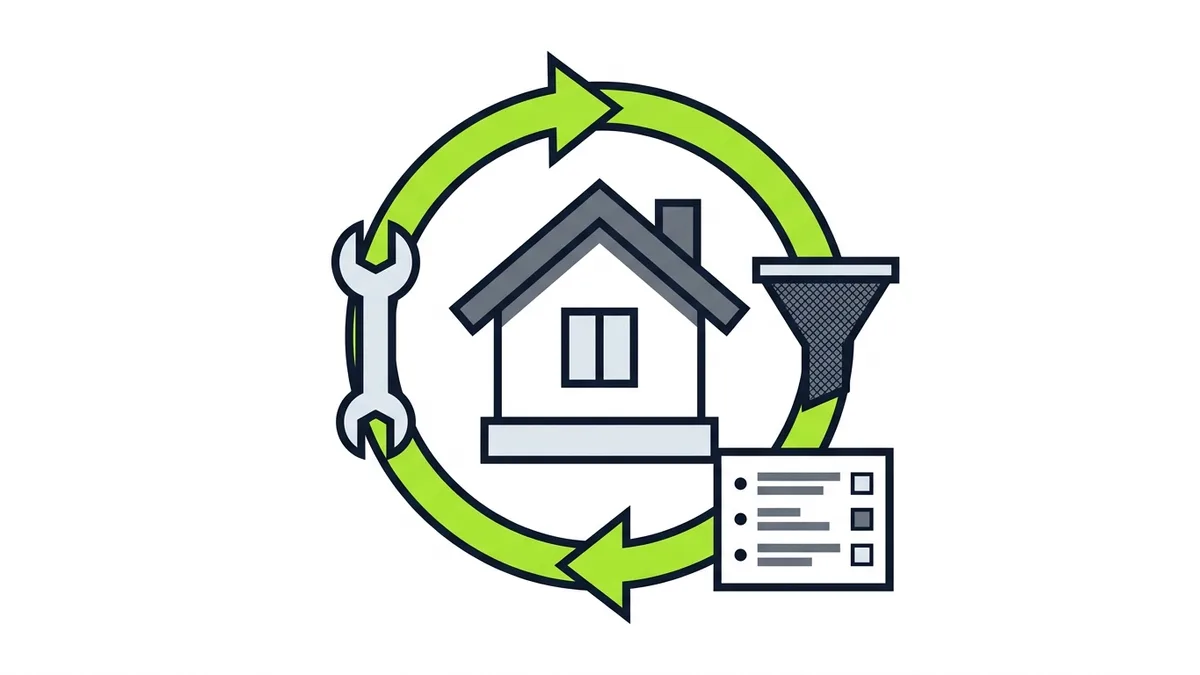
A maintenance plan is the most useful tool an HVAC company has against seasonality. Customers agree to scheduled visits, usually before cooling season and before heating season, and you get recurring revenue plus a reason to be in the neighborhood when the equipment ages.
The marketing value goes beyond the visit itself:
- It fills the slow periods. Tune-ups can be booked when emergency calls are low.
- It protects your best customers from competitors. The person with a plan calls you first when something breaks.
- It creates replacement opportunities. A technician who knows the system can recommend replacement honestly, with context, before an emergency forces a rushed decision.
- It creates review and referral moments. A satisfied plan customer is easy to ask.
Market the plan like a product. Give it a name, a page on your website and a short explanation of what is included. Offer it at the end of every repair and installation visit, because the customer is most aware of the system's value right then. Keep a simple list of plan customers and their reminder dates, and contact them before each season instead of waiting for them to remember.
One caution: do not promise what you cannot staff. A plan that guarantees visits you cannot make during the busy season creates the kind of reviews you do not want. Set expectations in writing.
What About Your Website and Your Phone?
Ads and listings only create the opportunity. The website and the phone close it.
On the website, the emergency visitor should see a phone number that works with one tap, your service area and what to expect when they call. The replacement visitor should find pages for each service, what is included in an installation, financing information if you offer it, and real photos and reviews. Avoid stock photos where you can: a picture of your own crew in your own truck builds more trust than a generic smiling family.
On the phone, treat every call as the most valuable moment in your marketing, because it is. Answer quickly, ask for the address and the problem, set expectations on arrival, and confirm. Do not let calls roll to voicemail with no callback plan. If you are too busy to answer during the rush, consider a live answering service or a dispatcher.
After the call, the job is not over. Send a text confirming the visit, follow up after the work and ask for a review the way you would want to be asked: short, friendly and with a direct link.
What Is a Simple HVAC Marketing Plan?
If you want a place to start, use this order:
- Fix the basics: the Google Business Profile, the website phone number and the way calls get answered.
- Build the review habit: ask every customer, reply to every review.
- Create separate pages and campaigns for emergency repair and planned replacement.
- Check LSA eligibility and, if you qualify, start with a modest weekly budget you control.
- Add Google Search Ads for the keywords LSA does not reach, with call and conversion tracking.
- Launch a maintenance plan and market it to every customer you serve.
- Review monthly: which channel produced calls, which calls became jobs, and what the cost per booked job was.
Do this before each season, not during it, and the season becomes something you capture rather than something that happens to you.
Frequently Asked Questions
What is the best marketing for an HVAC company?
There is no single best channel. A complete Google Business Profile with steady reviews, a website that makes calling easy, and paid search for urgent and replacement searches work together. Start with the profile and the phones, then add ads.
How do I get more HVAC leads?
Be visible where people search at the moment of need: the map results, Local Services Ads if you qualify, and Google Search Ads. Then make sure every call gets answered. A lead you miss is a lead a competitor gets.
Are Local Services Ads worth it for HVAC?
They can be, because you pay for valid leads such as calls and messages rather than clicks. Eligibility and screening vary by category and region, and lead pricing varies by location, job type and other factors. Check your own market before you commit a budget.
When should I start advertising for the busy season?
Before it. There is no fixed lead time, but anything that depends on Google gathering data or customers building trust, such as reviews, profile updates and campaign setup, should be in place before demand rises.
How do I get more maintenance plan customers?
Offer the plan at the end of every service visit, give it a clear name and a simple page, and contact plan customers before each season. A plan is easiest to sell right after a repair, when the value of a working system is fresh.
Can I pay Google to rank higher in the map results?
No. Google says there is no way to request or pay for a better local ranking. You can improve your profile, earn reviews and keep your information accurate, but you cannot buy the position.
Be Ready When the Phone Rings
HVAC marketing is mostly timing and clarity. Know which buyer you are talking to, be visible early, answer the phone, and use maintenance plans to give the slow months some work. None of this requires a huge budget to start. It requires doing the basics before the rush instead of during it.
Tell me how your HVAC company gets calls today and which season you want to prepare for. I will tell you where ads or local search pay off first. Etuos brings more than 10 years of digital marketing experience to local businesses. The diagnosis is free, with no deadline: send a message on WhatsApp or visit the contact page. For other trades, see the industry playbook for local service businesses.