
Landing Page vs Website: Which One Does Your Local Business Need?
2026-09-23 · by Lin Zeri
If you run a local business, you have probably heard two pieces of advice that seem to clash. One person says all you need is a simple landing page. Another says you need a real website. Both can be right, because they answer different questions.
This guide explains the difference in plain terms and gives you a short way to decide. It does not quote conversion rates or prices, because the honest answer depends on your business, your traffic and your offer.
Key Takeaways
- A landing page is one page built for one action, like a call or a quote request. A website is a set of pages that explains who you are and what you do.
- Where your visitors come from should drive the choice. People who click an ad need a focused page. People who search for you need a site they can explore.
- Most local businesses that run ads end up with both: the website as the base, and landing pages for specific campaigns.
- Google lists landing page experience as one of the three components of Quality Score, so the page behind your ad is part of how Google describes that ad.
What Is the Difference Between a Landing Page and a Website?
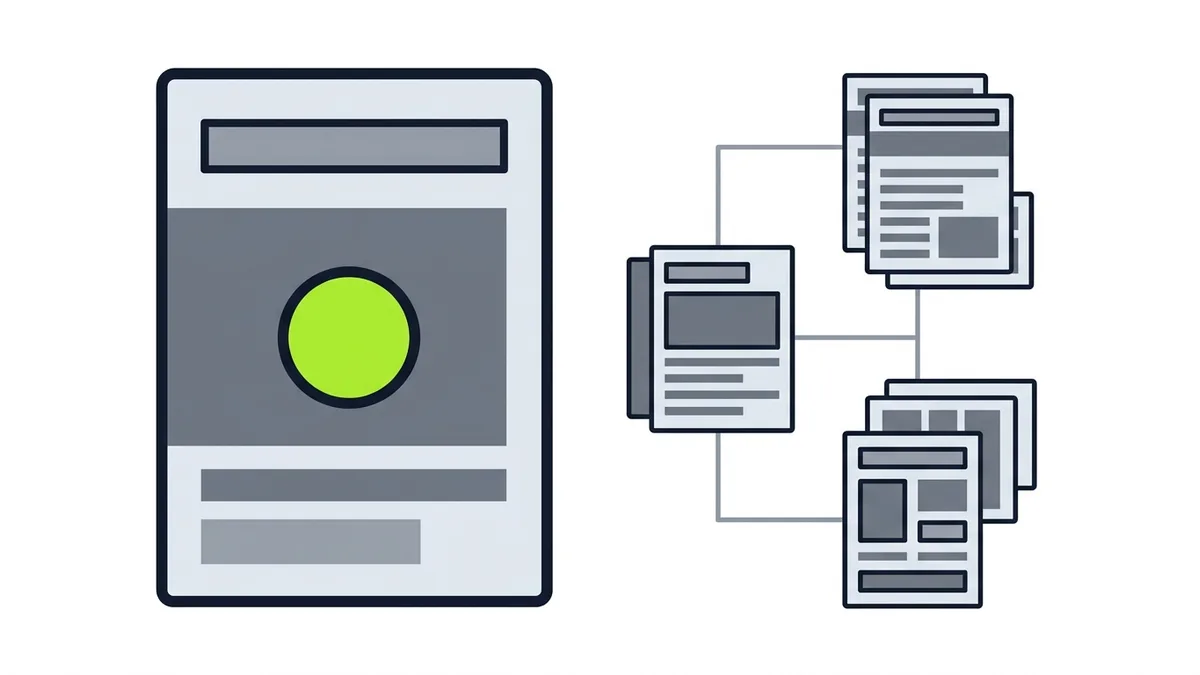
A landing page is a single page a visitor "lands" on, usually after clicking an ad, a link in an email or a post on social media. It has one goal. Everything on it points toward one action: call now, request a quote, book an estimate.
A website is a set of connected pages: a home page, service pages, an about page, contact details, maybe a blog. Its job is wider. It tells people who you are, what you offer, where you work and why they should trust you.
The practical difference is the number of exits. A landing page removes most of them on purpose, with no full menu and no long company story. A website keeps those doors open, because a person who is still deciding wants to look around.
| Landing page | Website | |
|---|---|---|
| Main purpose | Get one specific action | Explain the business and serve many needs |
| Pages | One | Several |
| Navigation | Minimal or none | Full menu |
| Best for visitors who | Just clicked an ad or a link | Searched for you or are still comparing |
| Message | One offer, one audience | Everything you do and where you do it |
| Search visibility | Limited to what one page can cover | Each page can target its own search |
That last row matters. A website can have a page for each service and each area you cover, and each page can answer a different search. For the full picture, read our complete guide to local SEO for service businesses.
When Does a Local Business Need a Landing Page?
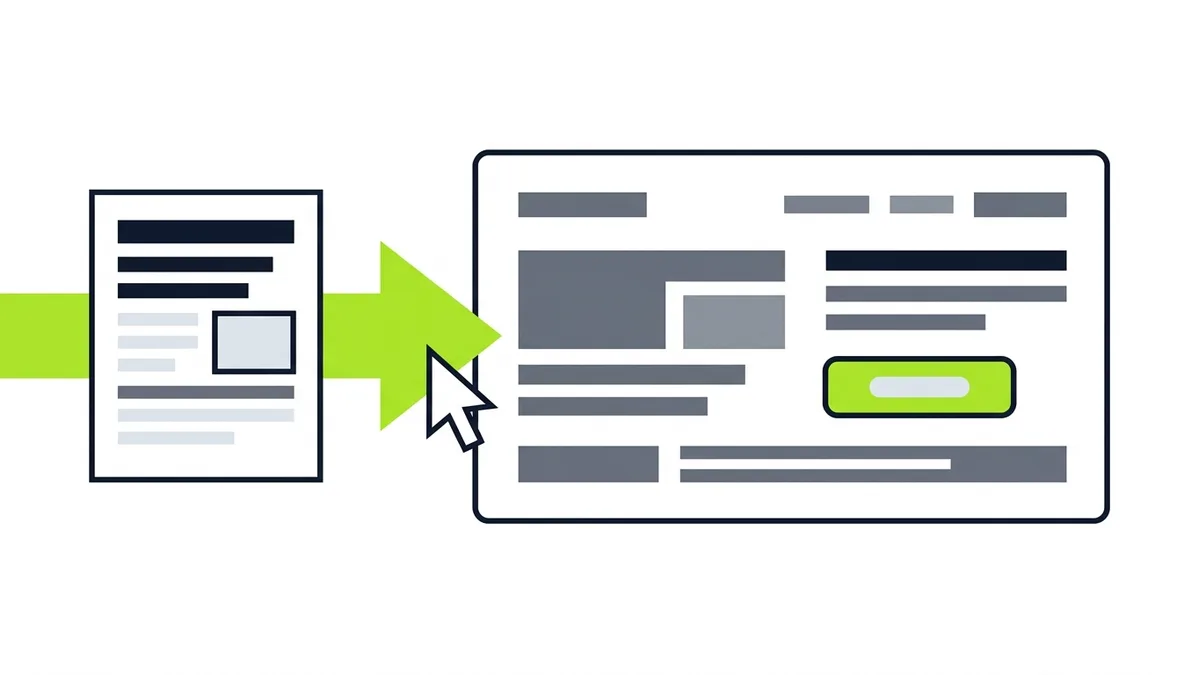
A landing page earns its place when you know exactly why a person is arriving and what you want them to do next. The clearest case is paid advertising.
Someone who clicks an ad for "emergency water heater repair" has a specific problem. If the ad sends them to your home page, they get a general welcome and a menu with eight options. They have to hunt for what the ad promised. A landing page that repeats the promise, builds a little trust and offers one clear way to call or message removes that hunting.
This is not only style. In Google Ads, the page behind the ad is part of how the ad is described. Google explains that Quality Score is calculated from the combined performance of three components: expected clickthrough rate, ad relevance and landing page experience. It also says Quality Score is not an input in the ad auction and is a diagnostic tool (Google, "About Quality Score for Search campaigns", Google Ads Help, accessed Oct. 2026). Read that carefully. It does not mean a landing page automatically lowers your costs. It means landing page experience is one of the things Google uses to show how well your ad and page work together, and it is one you can improve. For a closer look, see our post on Google Ads Quality Score for local businesses.
A landing page also makes sense when:
- You are promoting one service or offer, such as a seasonal tune-up or a free estimate.
- You are targeting one area or audience, like one neighborhood or Spanish-speaking customers.
- You want to test a message without touching your main site.
- You are sending people from a flyer, a text or a QR code, where visitors arrive with one idea in mind.
Because a landing page is so focused, it is a poor fit as your only online presence. Someone who hears your name from a neighbor will want to see more than one page.
When Does a Local Business Need a Website?
If customers can find you any way other than a single ad, you need a website. For a local business, that is almost always true.
People look up a business before they call. They search your name, check your reviews, look at your services, see whether you cover their area and look for a phone number. A website answers all of those questions. Without one, you are asking a stranger to trust a single page with a decision that often means letting you into their home.
A website is also where your long-term search presence lives. Each service page and service area page can show up for its own searches, without a new ad each month. A lone landing page cannot do that.
Reviews, your Google Business Profile and your ads all lead people to your site, so a weak site wastes that traffic. If you are weighing the investment, our guide to what a small business website should cost explains what drives the price.
A good local website usually includes:
- A home page that says what you do and where, on the first screen.
- One page per main service, written the way customers describe the problem.
- A page or section for the areas you serve.
- Proof: reviews, photos of real work, and licenses where they apply.
- Your phone number and a simple contact option on every page.
How Do You Choose Based on Where Visitors Come From?
Match the page to the visitor's intent: ad clicks go to a focused landing page, and everyone who is searching for you or comparing options goes to the website. Here is how that plays out by source.
- Paid ad. They clicked a promise and want it kept. Send them to a page that matches the ad. Sending all ad traffic to the home page is a common way to waste clicks. For budgets, see what paid ads cost a local business.
- Organic search. They typed a need or your name and are comparing options. Give them the full site.
- Google Maps and your Business Profile. Link your profile to the right page, usually the home page or your main service page.
- Word of mouth. A friend gave them your name. They will search it and look for proof you are real. That is a website job.
- Social media, texts and print. If the message is one offer, use a landing page. If it is general awareness, send them to the site.
If you serve both English-speaking and Spanish-speaking households, the website can carry both languages, and a landing page can speak to one group in its own words. For more, read about building a bilingual website for a small business.
How Do You Decide? A Simple Checklist
Build the website first, then add landing pages for ad campaigns and special offers. Five questions help you confirm that order for your business.
- Does your website clearly list your services, your area and a way to contact you? If not, start there. A landing page cannot replace it.
- Do you run, or plan to run, paid ads? If yes, plan a landing page for each main campaign on top of the website.
- Does one offer deserve its own spotlight? If yes, a landing page for it is reasonable.
- Do you serve more than one audience or area? Separate pages let you speak to each group directly.
- Can you keep the pages accurate? Fewer pages that are right beat many pages that are stale.
What Mistakes Should You Avoid?
Most mistakes come from using the wrong page for the visitor's intent. Avoid these four.
- Using a landing page as your only web presence. It gives people and search engines little to work with, and it can make a business look small.
- Sending ad traffic to the home page. The visitor has to translate the ad into a menu choice, and some will not bother.
- Giving a landing page too many goals. If it asks visitors to call, read the blog and follow you on social media, none of that happens well. Pick one action.
- Hiding the phone number. Make the call button easy to find, and test your own pages on a phone.
Frequently Asked Questions
What is the difference between a landing page and a website?
A landing page is a single page built to get one action, such as a call or a quote request. A website is a set of connected pages that explains your business, lists your services and serves visitors who want to look around.
Do I need a landing page if I already have a website?
Not always. If you run paid ads for a specific service or offer, a landing page that matches the ad usually serves visitors better than a general page. If you do not run ads, your service pages may already do that job.
Can a landing page replace my website?
For most local businesses, no. A landing page covers one offer. People who search your name or compare you with others look for services, areas, reviews and contact details, and that takes a website.
Does the landing page affect my Google Ads?
Google says landing page experience is one of the three components of Quality Score, along with expected clickthrough rate and ad relevance. Google also says Quality Score is not an input in the ad auction and is a diagnostic tool, so use it to spot problems with the page behind your ad.
Should I send my ads to my home page?
Usually a page that matches the ad works better. The home page is built for many visitors and many goals, while an ad makes one specific promise that the page should keep.
How many pages should a local business website have?
There is no fixed number. Include a home page, a page for each main service, your service areas, proof from real customers and a clear way to contact you. Add pages only when you can keep them accurate and useful.
What Should You Do Next?
Start with the base. Make sure your website says clearly what you do, where you work and how to reach you. Then, if you advertise, give each main campaign a page that keeps the promise the ad made. If you are not sure which one comes first, look at where your calls come from today and work backward.
Etuos brings more than 10 years of digital marketing experience to local businesses. If you want a second opinion on your pages and your ads, see how we approach website design and paid ads, or send a message on WhatsApp and tell us how your business runs today. We offer a free diagnosis with no deadline. You can also reach us on the contact page.
Sources
- Google, "About Quality Score for Search campaigns", Google Ads Help, retrieved Oct. 2026, https://support.google.com/google-ads/answer/6167118