
Your Ads Are Ringing the Phone: How to Handle New Leads So the Spend Is Not Wasted
2026-10-23 · by Lin Zeri
Most advice about Google Ads stops at the moment the phone rings. That is where the money is either earned or lost. You paid to get a stranger to reach out. What happens in the next few minutes of your day decides whether that spend becomes a job or just a number on a bill.
This guide covers the part after the ad. It explains who should answer, what Google counts as a valid lead, what happens when you miss a call, how follow-up contacts are billed, and how to flag a poor lead. Most of the billing rules below come from Local Services Ads, where you pay for leads. If you want to compare that model with regular search ads, read our guide to Local Services Ads vs Google Ads.
Key Takeaways
- In Local Services Ads you pay for valid leads, so every call or message you ignore is money already spent or ranking at risk.
- Google says that if you regularly fail to answer calls or respond to messages, your ad ranking may be affected.
- A missed call can still count as a lead when the customer stays on the line for more than 20 seconds during your business hours.
- Follow-up contacts from the same customer are not charged again within a set window, and you can flag a poor lead through the Feedback Survey.
Why Does What Happens After the Ring Matter So Much?
Because the ad has already done its job. The customer searched, saw you, and chose to contact you. From that point on, nothing about your campaign settings can save a lead you do not answer.
For Local Services Ads, Google ties the two together directly. It states that "You still only pay for valid leads (such as phone calls and messages) rather than ad clicks" (Google, "Local Services Ads transition to Performance Max campaigns with pay-per-lead goals", Google Ads Help, accessed Oct. 2026). Your cost is the lead. So the question is not "how do I get more leads?" until you can honestly say "I handle the leads I get."
There is a second reason. Google also warns that "If you regularly fail to answer calls or respond to messages, your ad ranking may be affected" (Google, "Getting started with Local Services Ads", Local Services Help, accessed Oct. 2026). Missing calls does not just waste one lead. It can push your ad down for the next customer too.
There is no trustworthy number for how fast you must respond, so skip the confident claims you see online. The practical standard is simple: a real person picks up, or the customer gets a clear reply, whenever the business is open.
Who Should Answer the Phone?
Pick one person, name them, and give them a backup. The most common failure for a small service business is not a bad ad. It is a phone that rings while the owner is under a sink, on a roof, or driving.
Decide these things before you turn the ads on:
- Who answers during business hours? An owner, an office manager, a family member, or an answering service you pay for. Make it one named person, not "whoever is free."
- What happens when that person is busy? A backup answers, or the call goes to a voicemail greeting that sounds like a real business and promises a call back.
- Who handles messages? Local Services Ads leads include text messages and email as well as calls. Someone has to check them as often as they check the phone.
- What is the script? Write three or four lines: your business name, a friendly greeting, the questions you need answered (what the problem is, where the job is, when they need you), and what happens next.
If you are still deciding where your first marketing dollars should go, see where to spend your first marketing dollars.
What Counts as a Valid Lead?
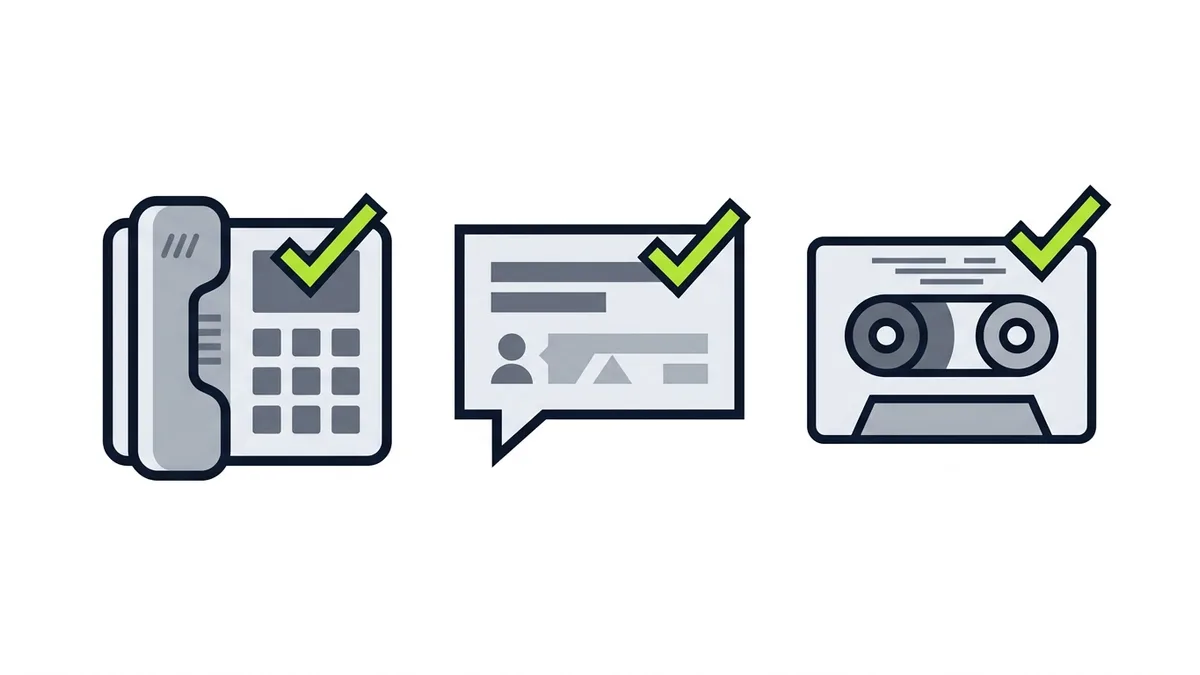
A valid lead is a real customer contact that is related to your business. Google says "Valid leads are related to your business and can occur when customers find your ads on Google" (Google, "How leads work", Local Services Help, accessed Oct. 2026).
The help page lists these contact types:
- Phone calls: "You answer a phone call or you call the customer back and speak with the customer."
- Missed calls: "You missed a phone call during your business hours and the customer stays on the line for more than 20 seconds."
- Messages: "You receive a text message or email from the customer."
- Voicemails: a voicemail from the customer.
- Bookings: "You receive a booking request from a customer (United States and Canada only)."
Two practical points follow from that list.
First, calling a customer back counts. If you miss a call and return it, you can still reach the customer and speak with them. A missed call is not automatically a lost job.
Second, a missed call can be a charged lead even though you never spoke to anyone. If the customer stayed on the line for more than 20 seconds during your business hours, it counts. That is a strong reason to make sure your voicemail greeting is clear and professional, and to return every missed call as soon as you can.
What Should You Do When You Miss a Call?
Call back and, if you can, send a short text right after. A missed call from an ad is a customer who was ready to talk to you and may be calling the next business on the list. The sooner you reach them, the better your odds. No source gives a specific time that matters, so do not build your process around a magic number. Build it around a habit: nobody goes to bed with an unreturned ad call.
A simple routine for missed calls:
- Check the number. Look at the call log and any voicemail.
- Call back. If they do not answer, leave a short voicemail with your business name and a phone number to reach you.
- Send a text. One or two sentences: who you are, that you saw their call, and what you need from them to help.
- Write it down. Note the date, the person, the service they wanted, and the result. This is your lead log.
Keep the lead log in a simple spreadsheet or notes app. You will use it to see which leads turn into jobs and to flag poor ones.
How Are Follow-Up Contacts Billed?
You are not charged again for the back-and-forth with the same customer, within limits. Google says: "Once a lead is charged, any follow-up calls or messages with that customer are not charged again, provided there is interaction within 15 days and the contact comes from the same phone number or email address" (Google, "How leads work", Local Services Help, accessed Oct. 2026).
In plain terms: the same customer calling you back, texting you a photo of the problem, or asking a follow-up question does not create a new charge, as long as the contact comes from the same phone number or email address and the conversation stays active within that 15-day window.
How Do You Handle a Poor-Quality Lead?
Flag it through the Feedback Survey for that lead. Google says that "leads determined to be invalid or low quality are not charged," and adds: "If you believe the lead you received is poor quality, you can let us know in the Feedback Survey for that lead" (Google, "How leads work", Local Services Help, accessed Oct. 2026).
Google says it "may also occasionally credit leads you report as poor quality through this survey." That is not a promise that every flagged lead is credited, so treat the survey as honest feedback, not a refund button. To make it useful:
- Report what actually happened. A wrong number, a caller looking for a service you do not offer, or a contact that clearly had nothing to do with your business are examples of things worth flagging. A customer who called and then chose someone else is not a poor lead. That is a normal sales result.
- Use your lead log. Notes written at the time are more reliable than memory a week later.
- Do it consistently. Flag poor leads as they come in rather than letting them pile up.
If many calls are about jobs you do not do, the fix may be in the ad setup. If calls are fine but nobody books, look at the conversation and the quote.
How Do Budget and Bids Connect to Your Capacity?
Your budget should match how many jobs you can actually take on. For Local Services Ads, Google explains that "When similar local businesses bid on the same lead, those bids determine how much the lead is worth" and that "The higher your weekly budget, the more leads you could get" (Google, "How bidding works for Local Services Ads", Local Services Help, accessed Oct. 2026).
That second sentence is the capacity question in disguise. More leads mean more calls to answer. If your crew is booked and nobody can pick up, a bigger budget just creates more missed leads and more risk to your ranking. Decide how many new jobs you can take on, make sure someone can answer what that budget brings, and raise spend only when both are true.
For the cost side of the picture, see our guide on what Google Ads cost a small business.
How Do You Know If the Leads Are Working?
Track what happens to each lead, not just how many arrive. From your lead log, count leads received, leads you reached, and jobs booked. If few leads are reached, fix your phone process. If they are reached but few book, look at your quote and follow-up. If they are poor from the start, look at the ad setup. And if nobody calls at all, the problem often starts on your website: see why a website is not getting calls.
Frequently Asked Questions
Do I pay for missed calls from Local Services Ads?
It can count. Google says a missed call during your business hours counts as a lead when the customer stays on the line for more than 20 seconds (Google, "How leads work", accessed Oct. 2026). That is why a clear voicemail greeting and a prompt callback matter.
Does not answering calls hurt my Local Services Ads?
It can. Google says that if you regularly fail to answer calls or respond to messages, your ad ranking may be affected (Google, "Getting started with Local Services Ads", accessed Oct. 2026).
Am I charged again if the same customer calls back?
Not within the window Google describes. Follow-up calls or messages with that customer are not charged again, provided there is interaction within 15 days and the contact comes from the same phone number or email address.
How do I report a bad lead?
Use the Feedback Survey for that lead. Google says leads determined to be invalid or low quality are not charged, and it may occasionally credit leads you report as poor quality through the survey. It does not promise to credit every one.
What Should You Do This Week?
Name the person who answers the phone, write a short script, set up a lead log, and decide how you will handle missed calls. Those four steps cost almost nothing and protect every dollar you spend on ads.
Etuos brings more than 10 years of digital marketing experience and has managed over $500,000 in ads. If you want help setting up your ads so the calls you get are the calls you want, see how we approach paid ads for local businesses, or send a message on WhatsApp and tell us how your business handles calls today. We offer a free diagnosis with no deadline. You can also reach us on the contact page.
Sources
- Google, "How leads work", Local Services Help, retrieved Oct. 2026, https://support.google.com/localservices/answer/7195435
- Google, "Getting started with Local Services Ads", Local Services Help, retrieved Oct. 2026, https://support.google.com/localservices/answer/6224841
- Google, "How bidding works for Local Services Ads", Local Services Help, retrieved Oct. 2026, https://support.google.com/localservices/answer/10125017
- Google, "Local Services Ads transition to Performance Max campaigns with pay-per-lead goals", Google Ads Help, retrieved Oct. 2026, https://support.google.com/google-ads/answer/17213585